Heat recovery boiler systems: the crucial role in thermal energy recovery
Category: General
Published: 24/11/2026
Our Engineering Manager, Andrew Burrows examines the crucial role heat recovery boiler systems play in thermal energy recovery.
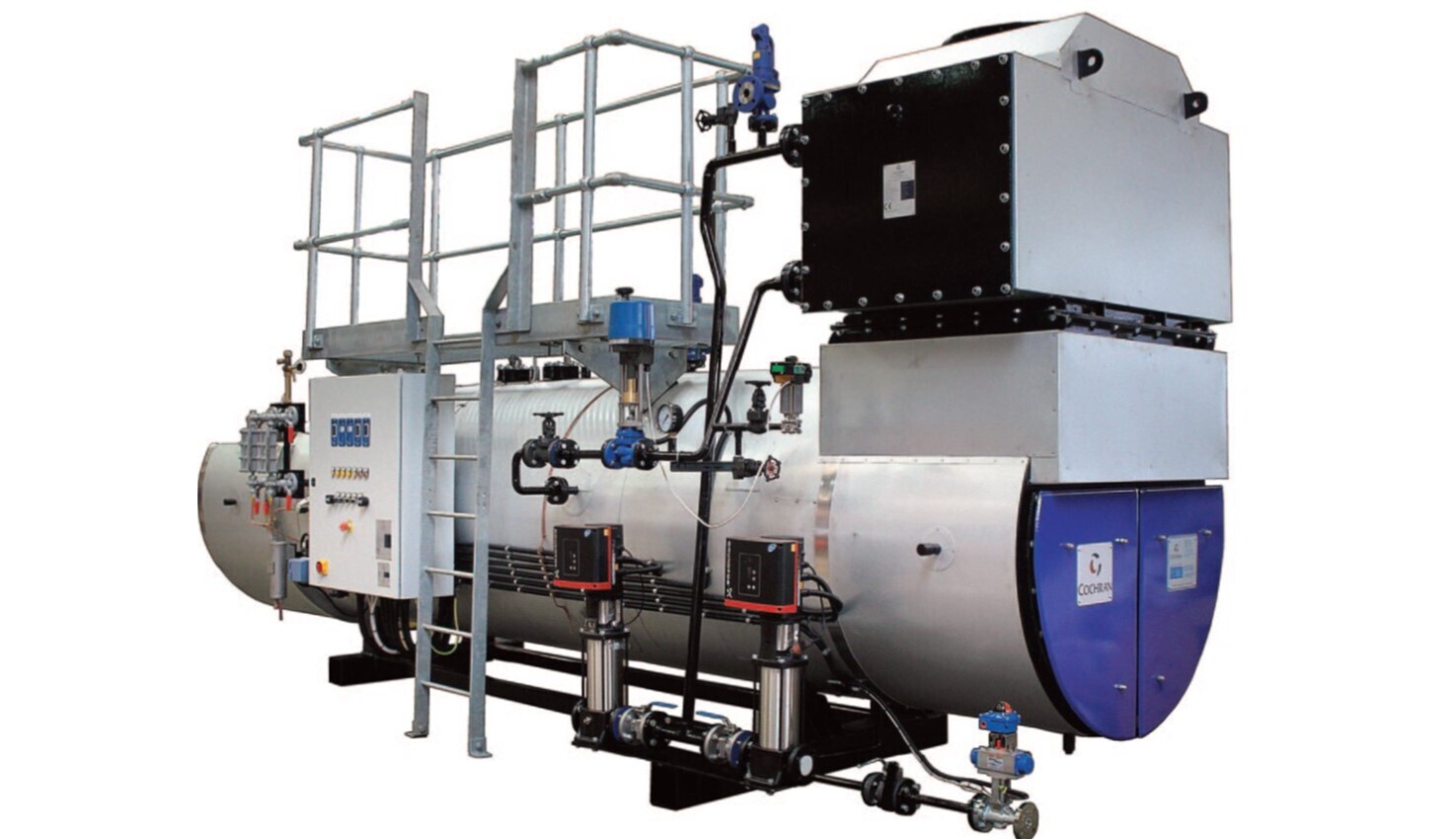
A heat recovery boiler system captures and reuses lost heat from hot gas streams that would otherwise be vented into the atmosphere. This energy is recycled back into the system and converted into steam or hot water for various applications.
Heat recovery boilers can lead to significant cost savings, reduced emissions and improved operational efficiency. When considering investment in a heat recovery system it’s important to think about a suitable waste-heat source, usable steam or hot-water demand and equipment costs.
How do heat recovery boiler systems work
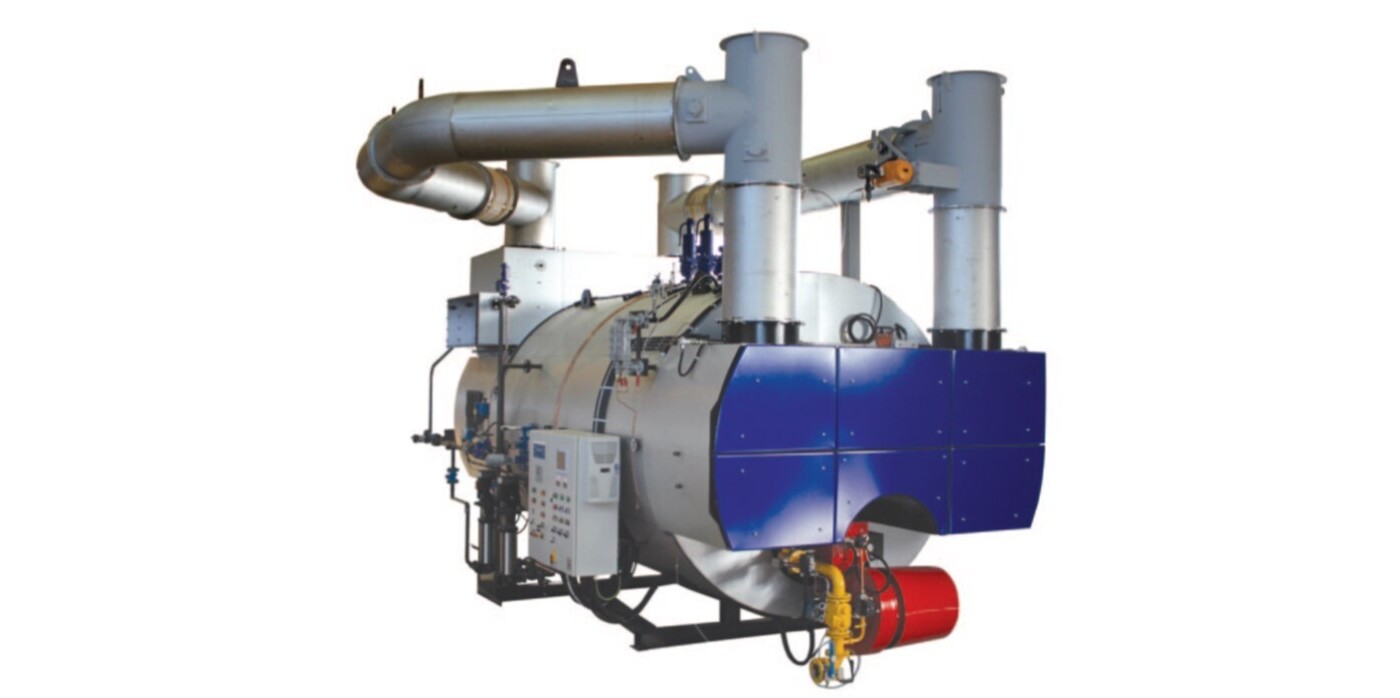
A conventional fired boiler burns oil or gas to create a flame that produces steam or hot water. A heat recovery boiler has no burner and instead uses hot exhaust or process gas from an engine, turbine, thermal oxidiser, incinerator or another heat source to generate steam or hot water. A composite boiler combines both technologies by incorporating a fired section and a heat recovery section.
- Gas engines used for on-site electricity generation can produce exhaust at around 400°C to 500°C. The boiler recovers the exhaust and reduces it to approximately 130°C while using the heat.
- Thermal oxidisers and incinerator-type systems can generate gases reaching around 1000°C. This recovered heat may be used to produce steam or hot water, or to cool the gases before they are filtered and released.
What are the main applications and industries
Hospitals are moving from steam to hot water. Where a hospital has a suitable combined heat and power system and a continuing steam demand, recovering the exhaust heat can be a straightforward choice because it converts wasted energy into useful output. This needs to be measured against electricity prices, the ability to export electricity to the grid, government incentives, capital cost and payback period.
A heat recovery boiler is a good option if the site has a combined heat and power engine or gas turbine, but as a substantial investment its viability depends on factors like heat-producing asset installation and how the resulting steam or hot water can be used.
Incineration and thermal oxidation
Incinerator and thermal oxidiser projects may have high-temperature gases that need to be cooled even when the site does not require steam. Here, the boiler can support gas treatment by reducing the temperature before filtration or atmospheric release. Other sites do have steam demand, making heat recovery useful for energy production and managing exhaust stream.
Biogas systems
Food waste and other organic materials are used to produce biogas, which then in turn can be used for heat recovery and electricity. This process increases sustainability and generates renewable energy from the anaerobic digestion of organic waste.
Market development
Demand for combined heat and power depends on the relationship between gas and electricity prices and government-backed schemes and incentives.
The gas-engine combined heat and power market is quiet, with gas engines increasingly used for local or backup electricity generation, including battery-island or small power-island applications
Long-term energy savings can be substantial when selling electricity or operating continuously against the main grid. A hospital can utilise recovered exhaust rather than burning additional natural gas over a 30-year operating life.
The incineration market is smaller but more consistent because fewer suppliers have the specialist capability required, whereas the water industry is an area of future growth because of renewed investment.
Technical capacity and operating limits
Investing in a heat recovery system with engines below 0.5 megawatt may well be too expensive. Turbines around 5- to 7-megawatts are often more suitable. Larger installations may require water-tube boilers and fall outside the company’s normal fire-tube portfolio. The upper limits also depend on gas flow, temperature, boiler size, design constraints, and material selection; with an approximate temperature capability of 1000°C to 1100°C for relevant designs.
Projects are not governed by a single fixed maximum because gas flow and temperature can offset one another. A gas stream of 1300°C may be diluted with air to approximately 1000°C, increasing the mass flow while bringing the conditions within the boiler’s capability.
What does the future hold
We’ve harnessed 150 years of expertise to design and manufacture heat recovery ranges for different engine configurations, including one- and two-stream arrangements and systems serving one or two engines. We also design bespoke projects to meet a customer’s specific requirements.
We see emerging technologies where heat recovery boilers can be used as part of a large thermal storage systems, where off-peak energy is generated and stored until required.
This is an excerpt from an article in Process Industry Informer. To learn more about our heat recovery boiler systems, get in touch with our team.